

St Bartholomew, Leeds
The Story in Depth
A surplus vicarage and church hall site was empty for two decades until the diocese sold it to a local housing association. They have transformed it into an attractive development of exemplary homes, largely for social rent.
-
Starting point
The Diocese of Leeds had been trying to sell a surplus vicarage and community hall at St Bartholomew’s in Armley, Leeds, for around two decades. For much of this time, the vicarage was occupied by property guardians to keep it from falling into disrepair and stop squatters moving in.
Over the years, the diocese received various offers to buy the property, but each one fell through for one reason or another.
In 2023, inspired by the Coming Home Report from the Archbishops Commission on Housing, Church and Community, the diocese created a new post of Property Development Manager. The post holder brought a new focus and energy to managing and disposing of the diocese’s glebe land and ex-benefice sites.
The Property Development Manager supported the process of selling the site in Armley to the housing association 54North Homes, a subsidiary of the Karbon Group; the sale completed in April 2024.
-
The plan
54North obtained planning permission to demolish the existing buildings and deliver 28 new affordable homes. Leeds City Council had just published a report that housing need was high in Armley, with over 800 households on the housing register, many of whom required either two-bed or three-bed family homes.
There were challenges in securing planning consent, mainly due to the number of trees on the site. The original proposal was for a scheme of 33 homes, but through negotiations with the council’s tree officer, the density was reduced to ensure as many trees as possible were retained. The homes were also designed to meet nationally described space standards and offer good sized gardens.
The houses were built to a high level of sustainability, including air source heat pumps, MVHR systems (mechanical ventilation with heat recovery), solar panels and an electric vehicle charger for each property – a higher specification than most standard market homes, which ensure low running costs for tenants.
54North appointed Ashfield Group as main contractor – a Wetherby based construction company specialising in residential projects, known for delivering high quality, sustainable homes and supporting clients throughout the process to design and construct the houses.
-
The journey
An early problem concerned access to the neighbouring Scout Hut along a track that bordered the site. However, after several conversations the dispute was resolved and subsequently Ashfield Group supported the Scouts practically by contributing to their energy bills for a 12-month period - and naming the development Pilkington Grove, after a much loved Scout leader. The Scouts also made three hedgehog shelters, which were placed around the site.
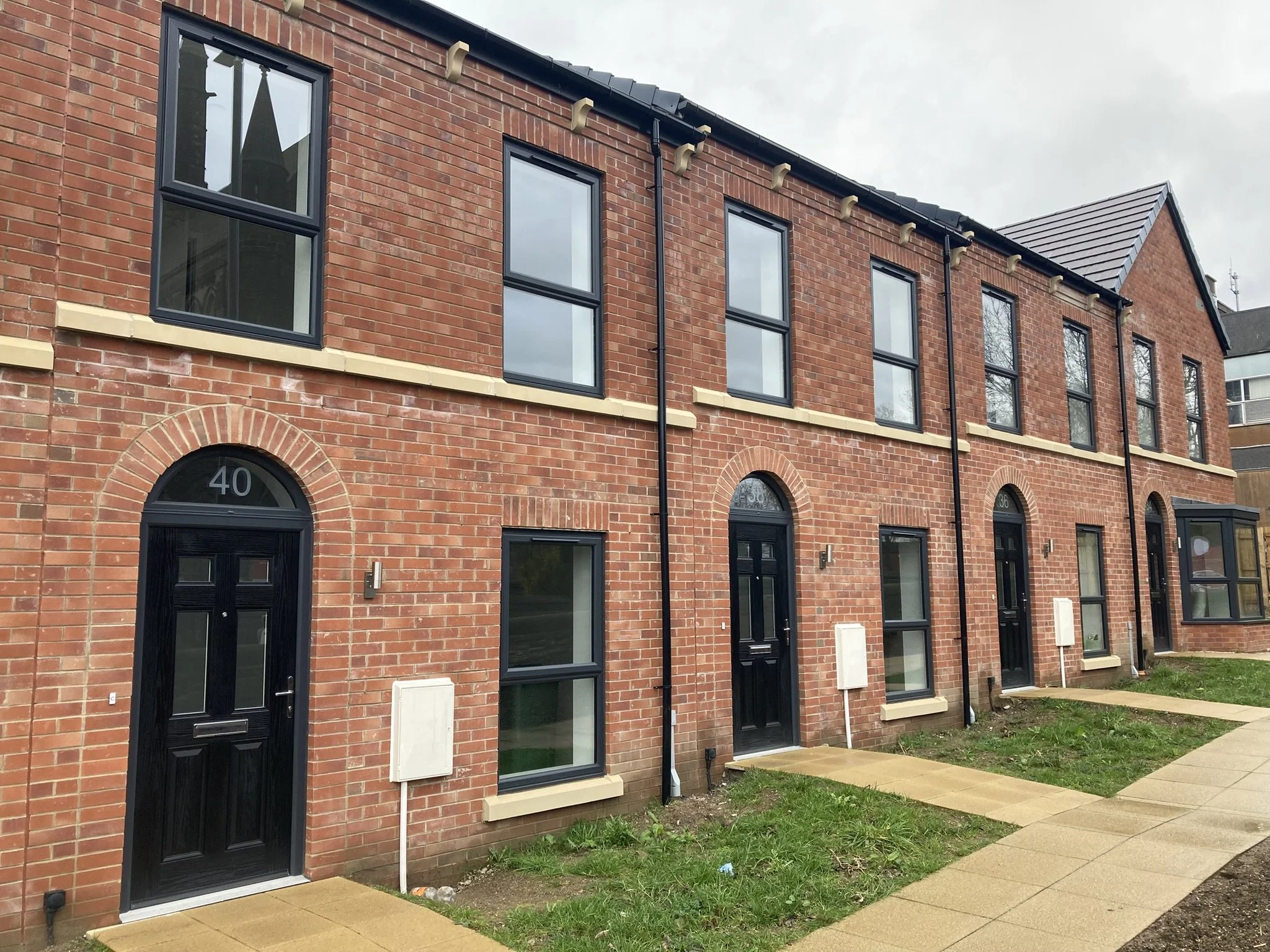
Construction progressed well to deliver 20 two-bedroom houses, 6 three-bedroom homes and 2 two-bedroom flats, one of which is fully wheelchair adapted. Of the 28 properties, 22 are for social rent tenants, and 6 for shared ownership.
Building design reflected the local vernacular, and mature trees and shrubs were retained to support the existing ecosystem and give the development a sense of history and character. The grassy areas between the clusters of houses provide opportunities for tenants to socialise, fostering a sense of community and creating a good environment in which to live and raise a family.
The latest technology has been incorporated so that the housing association can monitor remotely the air source heat pumps that provide the heating and hot water for the homes, and respond to any faults promptly. Residents can also disable the EV charger in their designated parking place, to prevent unauthorised use.
All initial tenancies – and 60 per cent of subsequent lets – will be offered to people on the council’s housing register. The first three tenant households moved in during February 2026, and the other properties were occupied by the end of March.
The development scores highly against the five values for good housing set out in the Coming Home report: safe, sustainable, stable/affordable, sociable and satisfying.
(story continues below the photo gallery…)
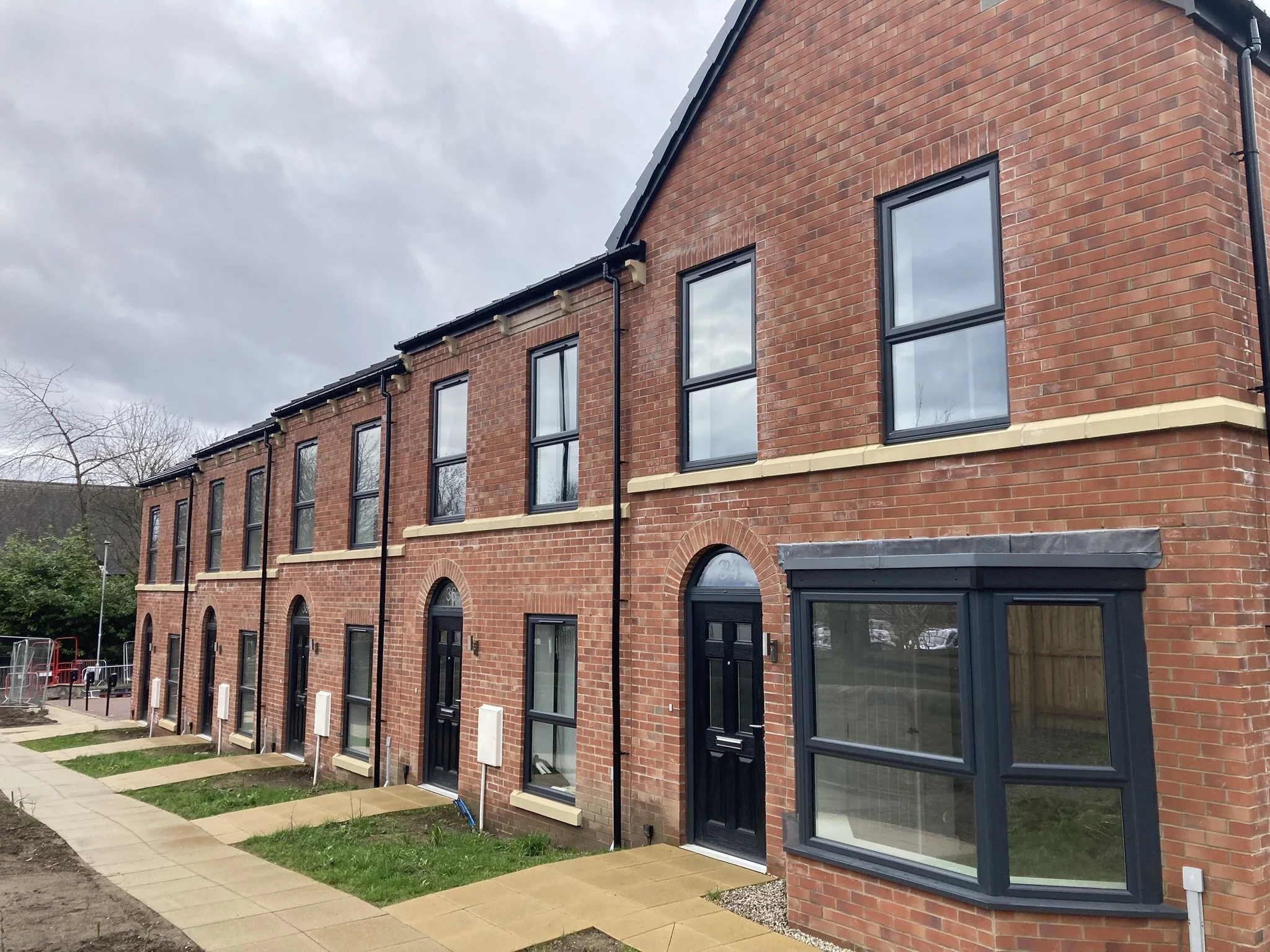
Frontage on to Wesley Road
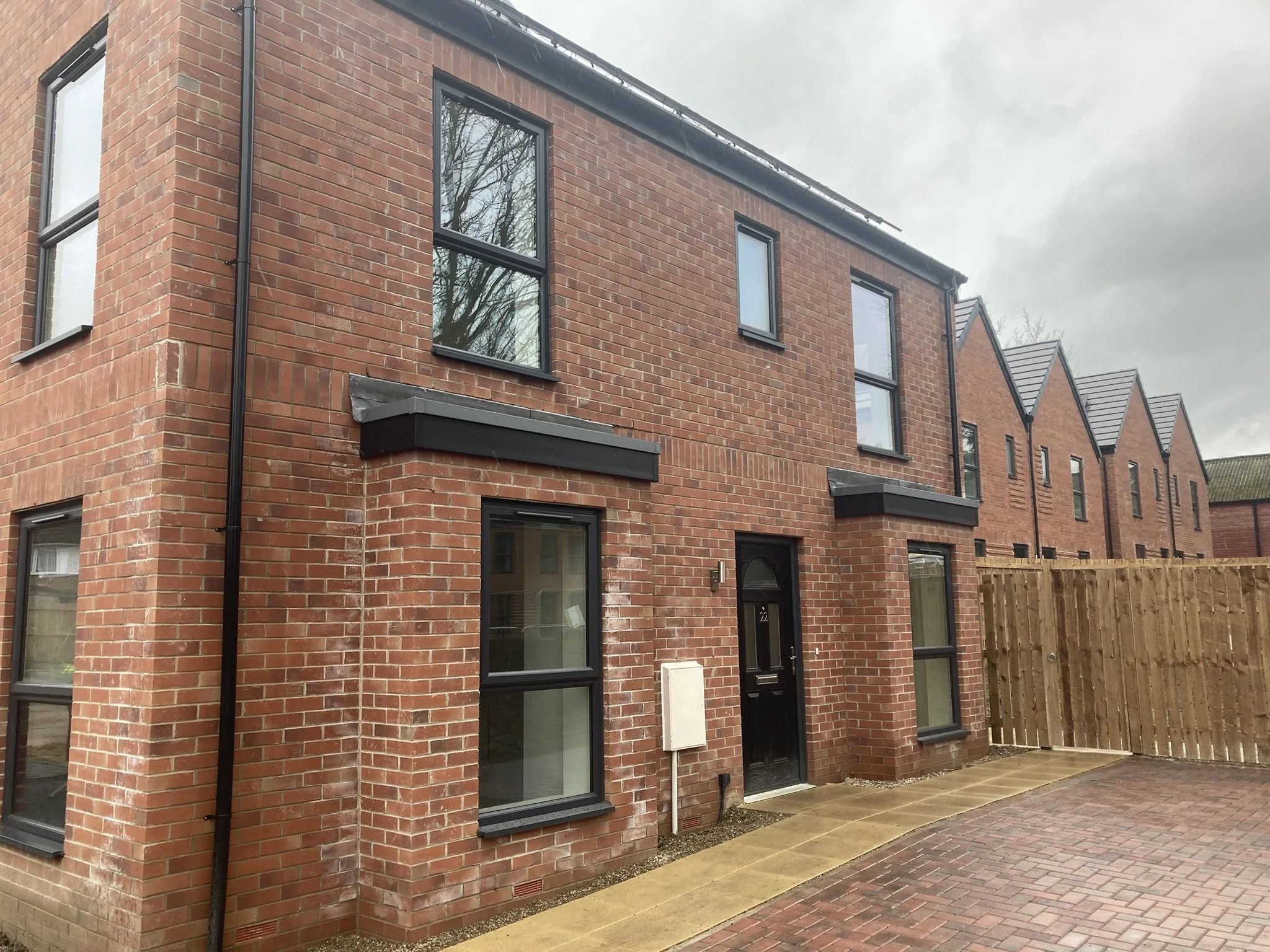
One of the three-bedroom homes
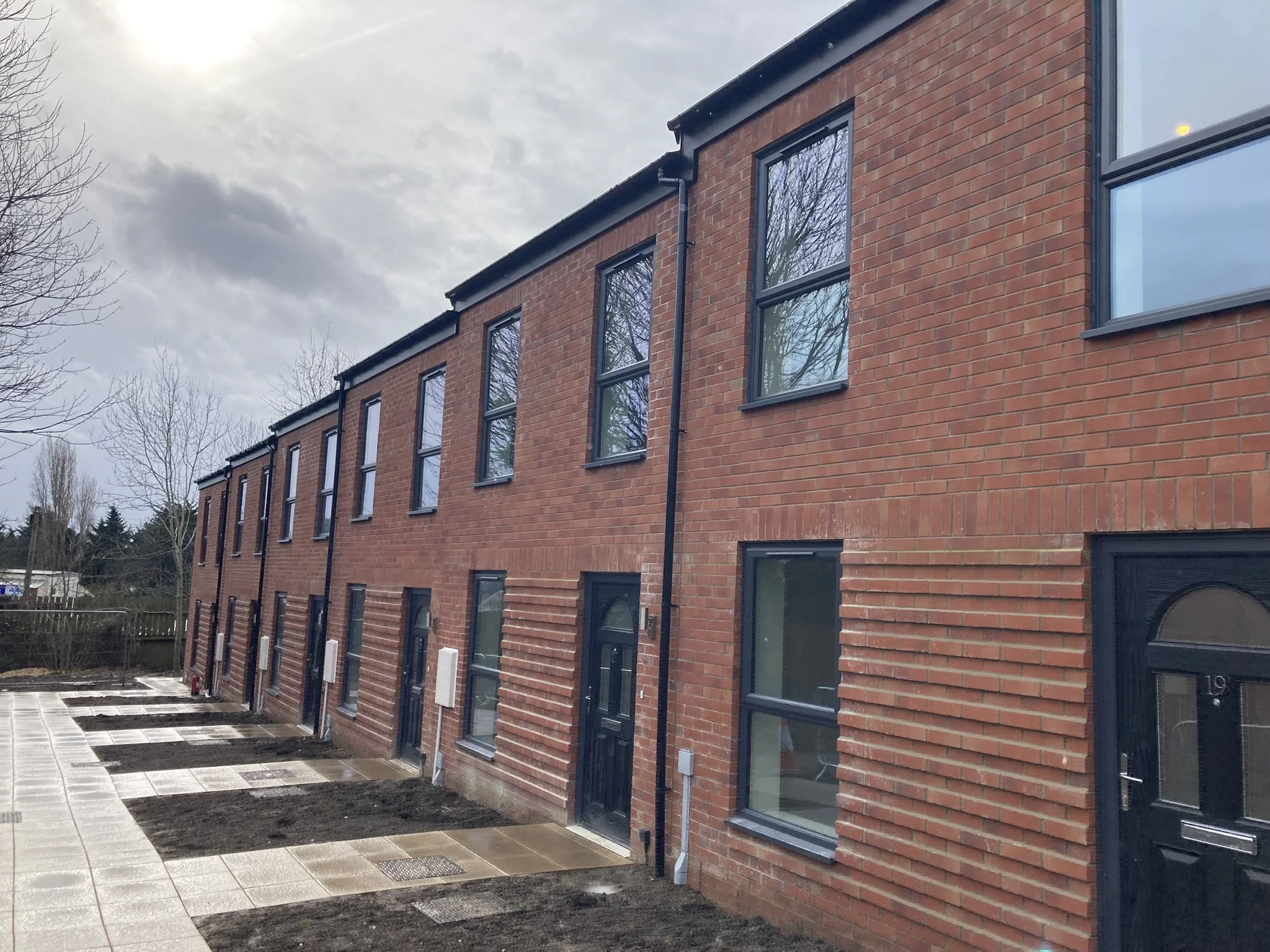
Frontage nearly complete
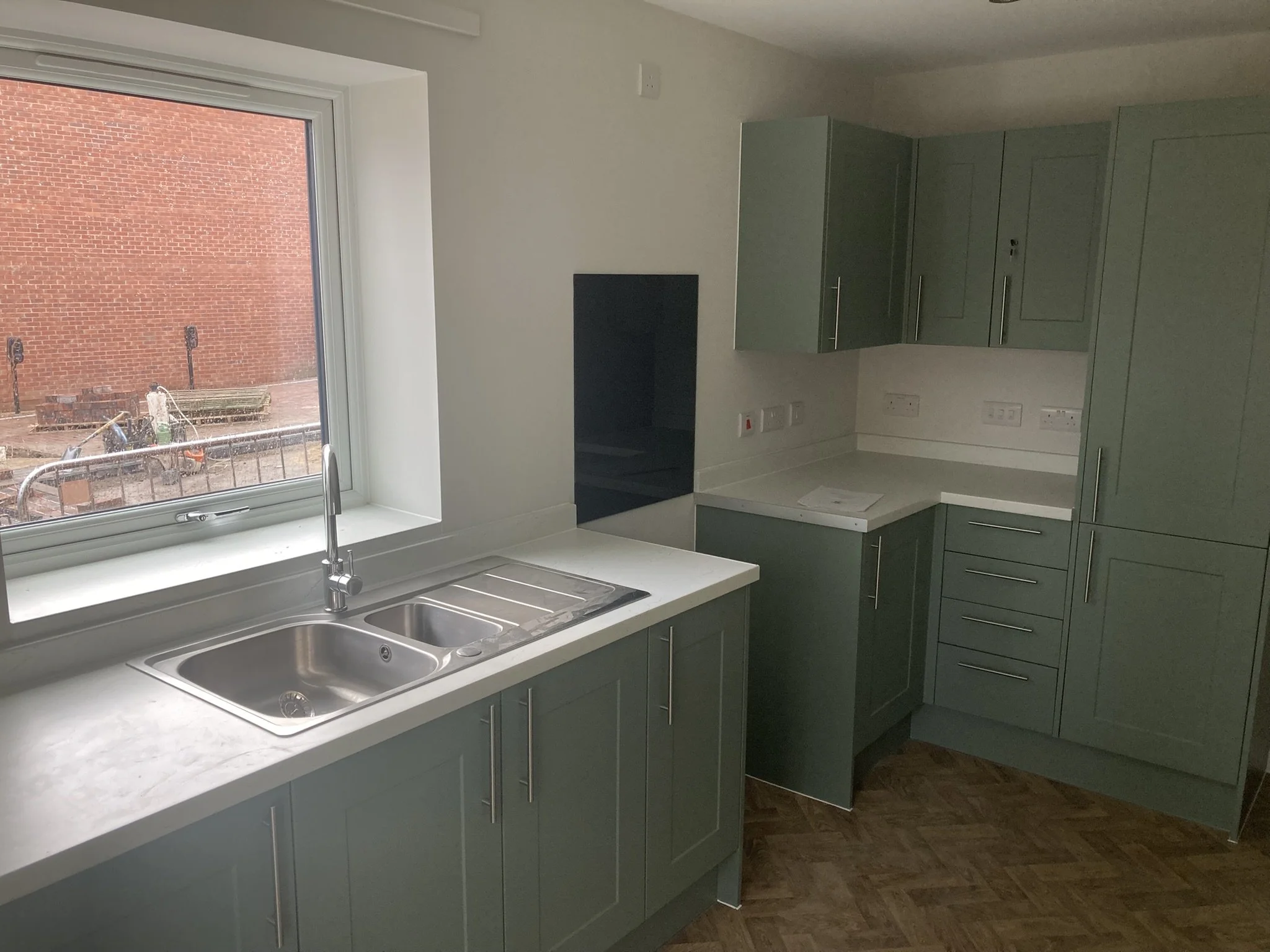
The same quality kitchen is fitted to shared ownership and social rent homes
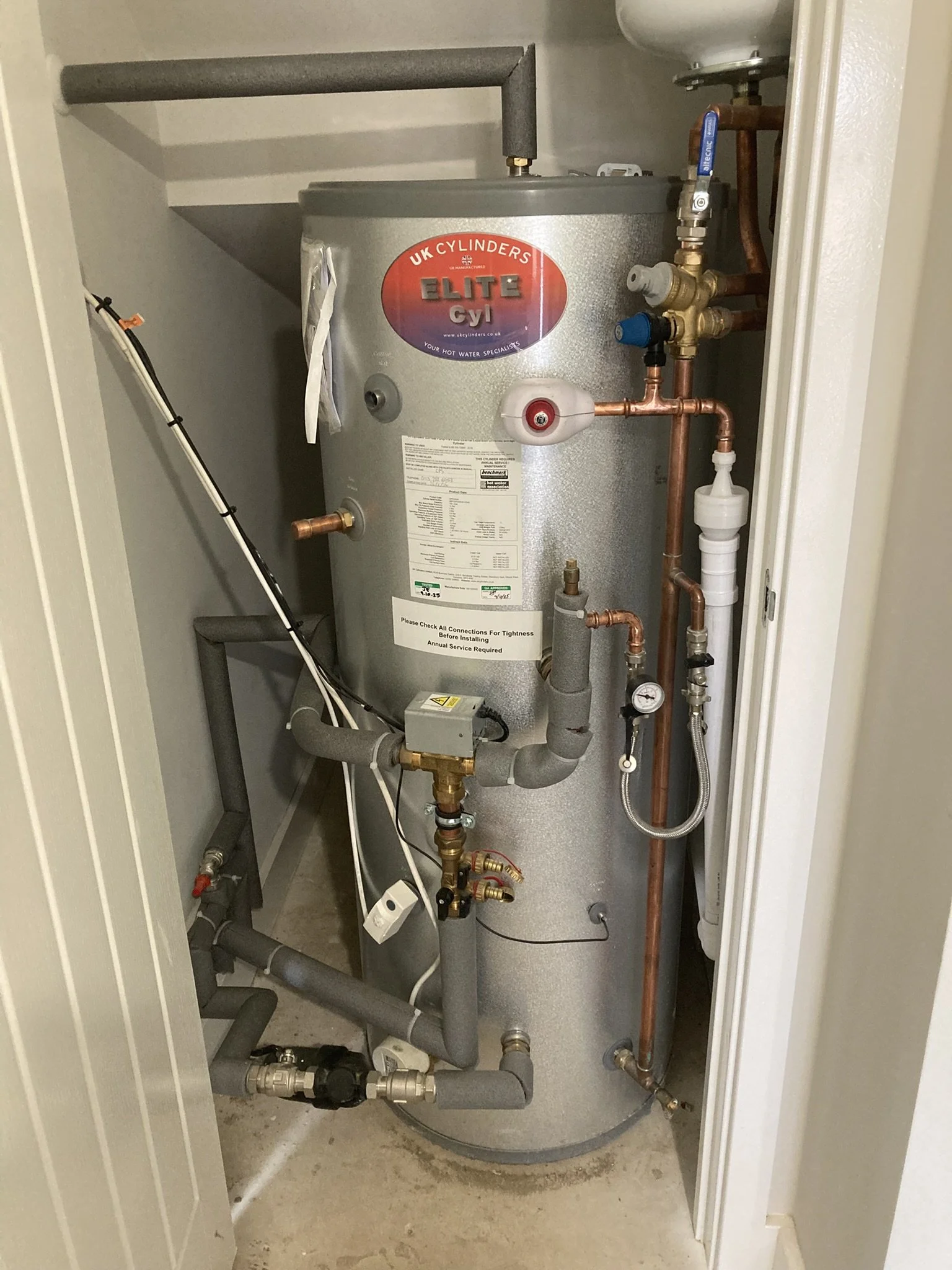
Hot water boiler powered by the air source heat pump
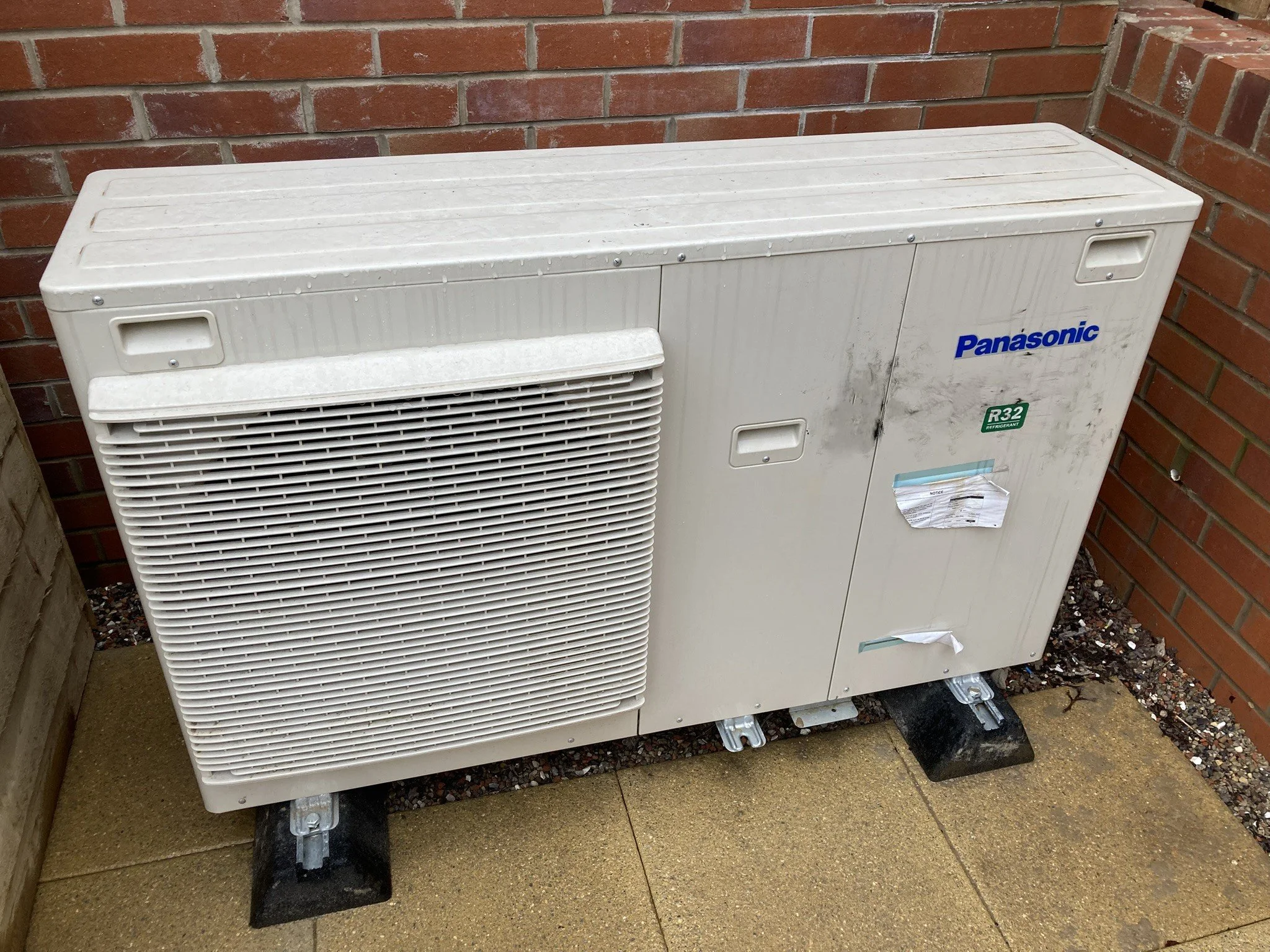
Air source heat pump for a three bed house
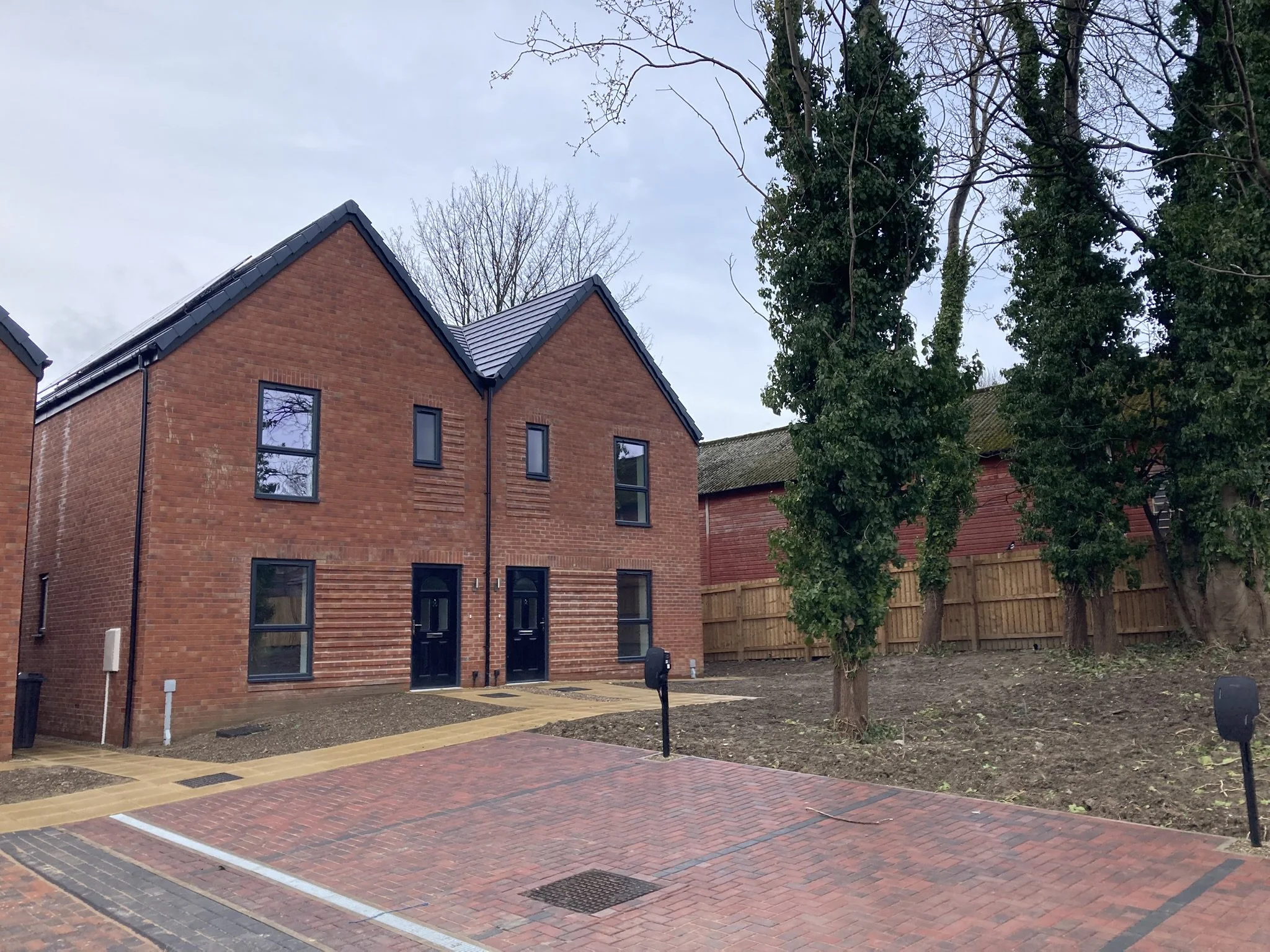
Shared ownership houses
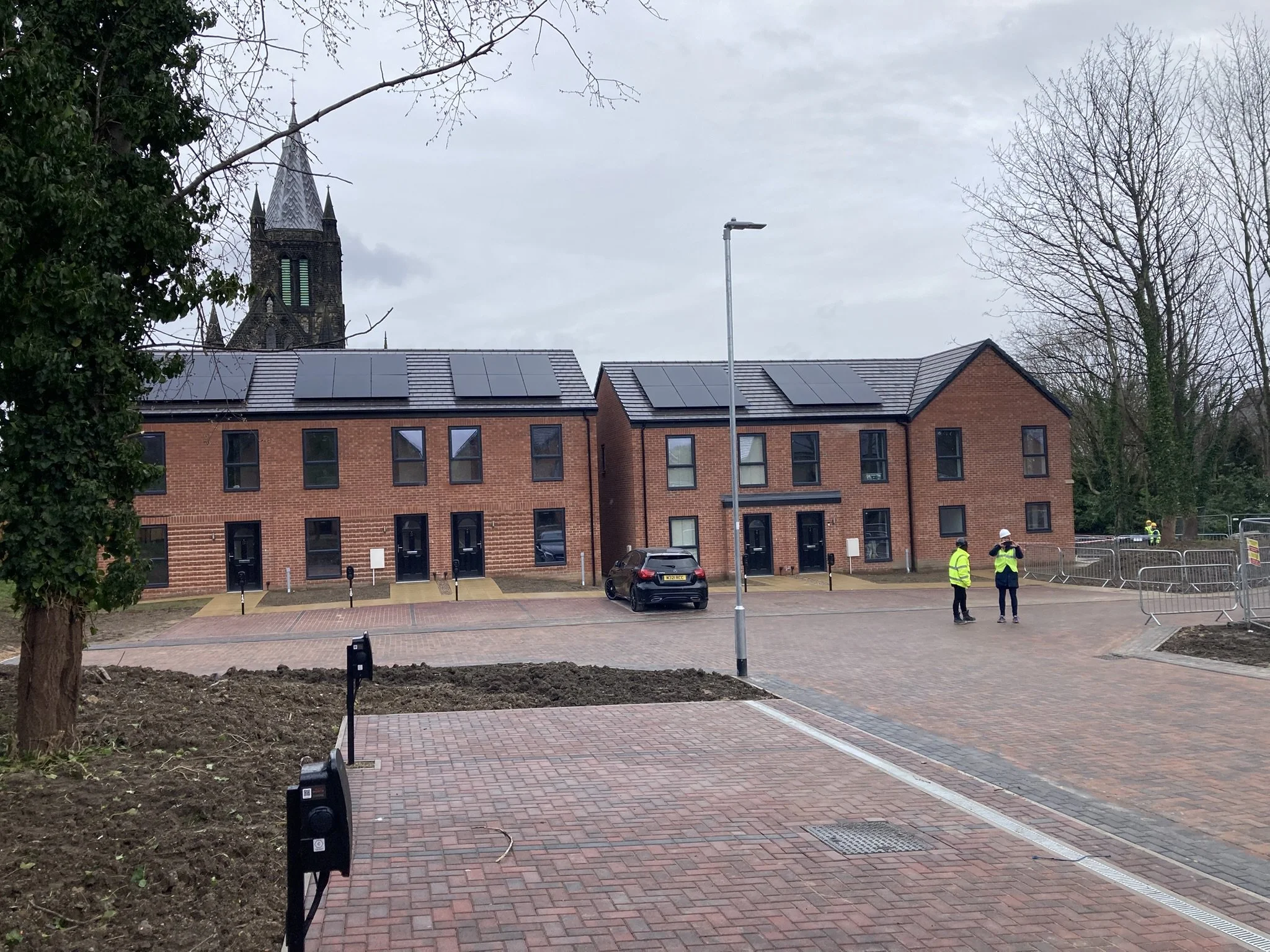
Spacious courtyard area, with EV chargers at each parking spot, and solar panels on every roof
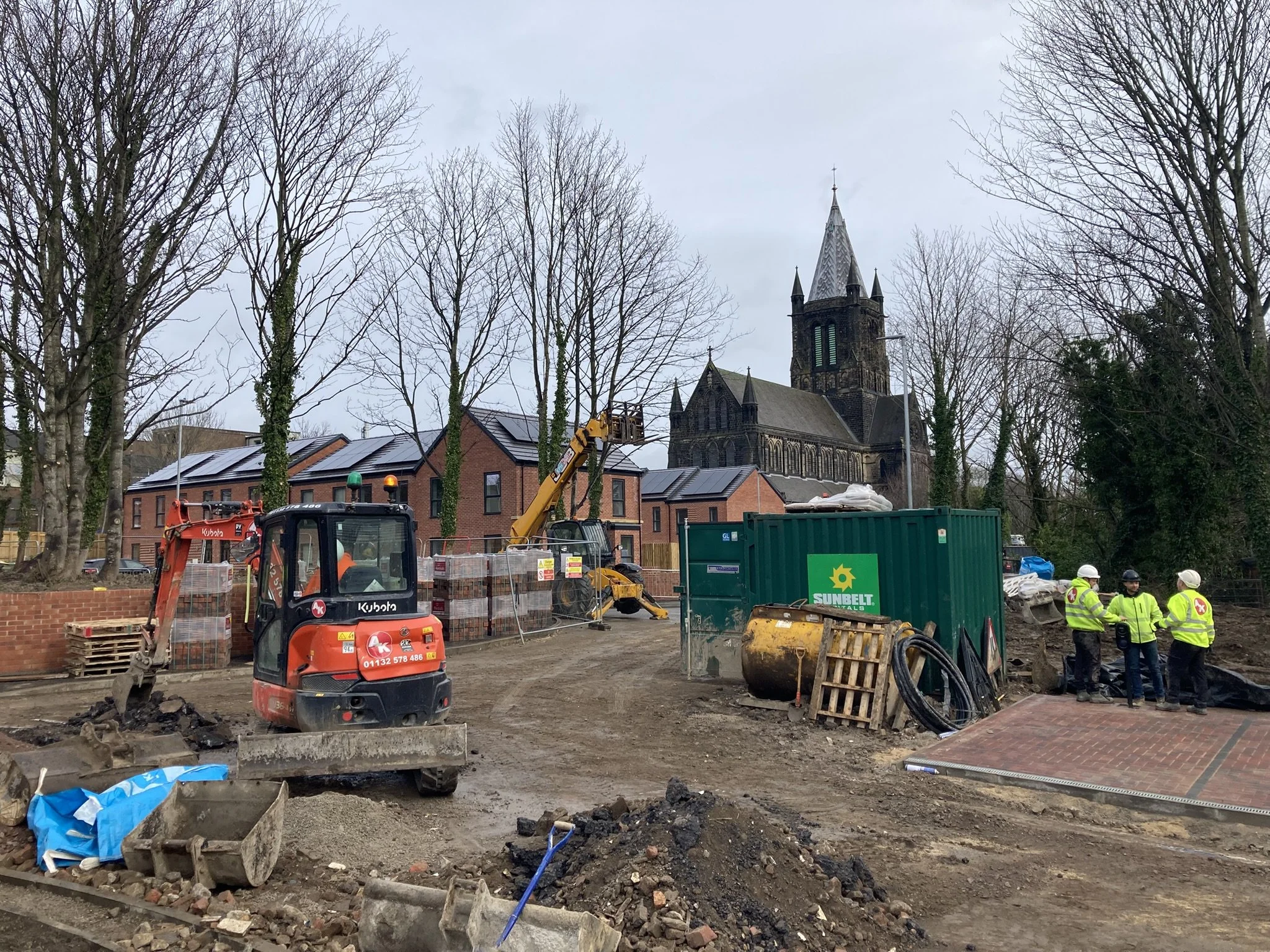
Finishing the landscaping
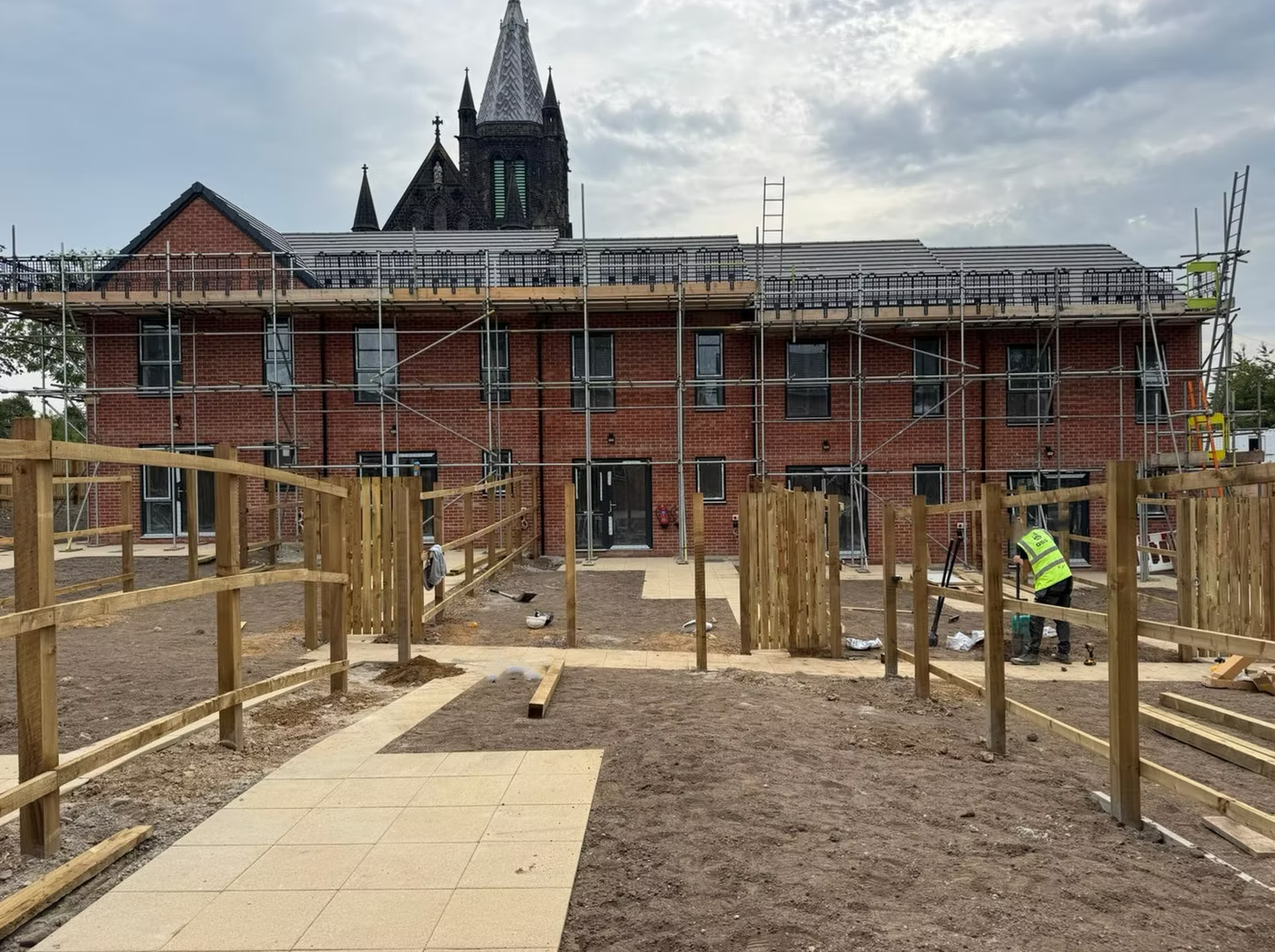
Fencing going up to separate the gardens
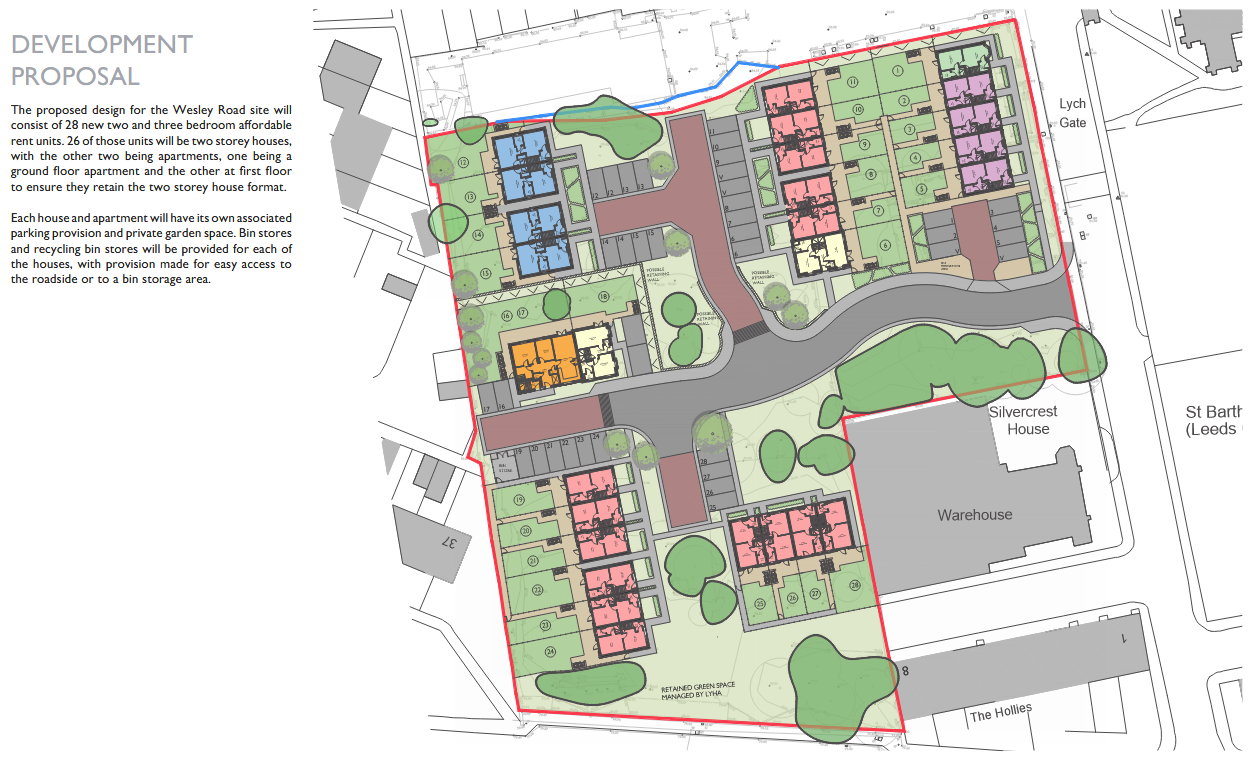
Architect's drawing showing the overall layout
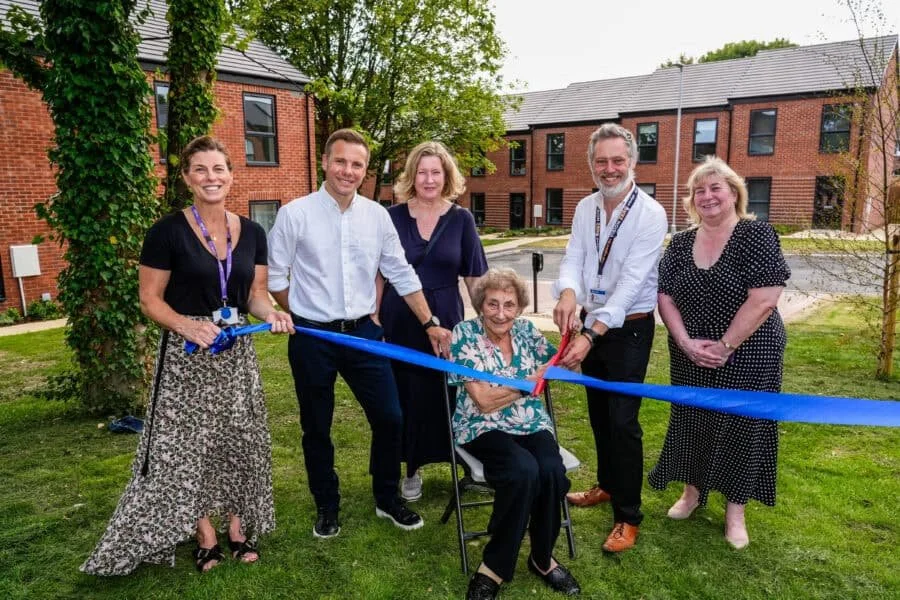
The ribbon was cut by the widow of Ron Pilkington, after whom the scheme was named
-
Resources
The diocese obtained £620k for the freehold of the site which was jointly owned by the diocese and the St Bartholomew’s Parochial Church Council.
The total construction costs of development came to £5.575 million. Leeds City Council committed £700,000 to the project from a funding stream which supports affordable housing delivery using pooled financial contributions paid by developers as part of planning agreements. This additional grant supported the housing association’s ambitions to deliver a truly affordable scheme, offering properties at social rents, which are generally between 50-60% of open market rent. It supported the higher costs of delivering sustainable houses which achieved EPC A rating.
The development was also supported by a grant from Homes England, through their Strategic Partnership with Karbon Homes Group. This partnership has provided Karbon with £184 million in funding to deliver 2,324 new affordable homes across the North East and Yorkshire.
-
Keys to success and biggest challenges
· The recruitment of a Property Development Manager by Leeds Diocese helped accelerate the delivery of affordable housing on the site.
· The issue of access for the Scout hut was transformed from a problem to an opportunity by the Ashfield team.
· There are likely to be challenges for tenants in learning how to use the heating system. Unlike gas boilers, which can quickly heat up a cold house, air source heat pumps take much longer to raise the ambient temperature. Similarly, the benefits of the MVHR system in reducing energy bills will only be gained if residents learn when to open and close doors and windows in the house for temperature control.
· To help the residents feel confident with their new heating system, Ashfield have organised demonstration days to ensure residents are fully familiar with its operation. They have also arranged training for the 54North Homes maintenance team.
-
Final outcomes
The diocese received a substantial sum for the site, which was no longer needed by the parish, and costing a lot to keep secure. 28 families in the Armley area of Leeds have been able to access new, genuinely affordable housing, that is energy efficient and in a spacious setting.
One newly housed mother said, “The Shared Ownership scheme has given our family an opportunity we never thought we would have so soon. It has allowed us to take our first step towards home ownership and move away from an expensive private rental.
“One of the things that means the most to us is the outdoor space. Seeing our children playing happily in front of the house or in the back garden, enjoying the green space, brings us so much joy. We also really appreciate the thoughtful design of Pilkington Grove, creating affordable homes without compromising on quality. It truly feels like a wonderful place for families to live and has had a really positive impact on our lives.”