Plans to end homelessness – from the nation to the neighbourhood
The Church of England’s lead bishop for housing, Rt Revd Dr Guli Francis-Dehqani writes:
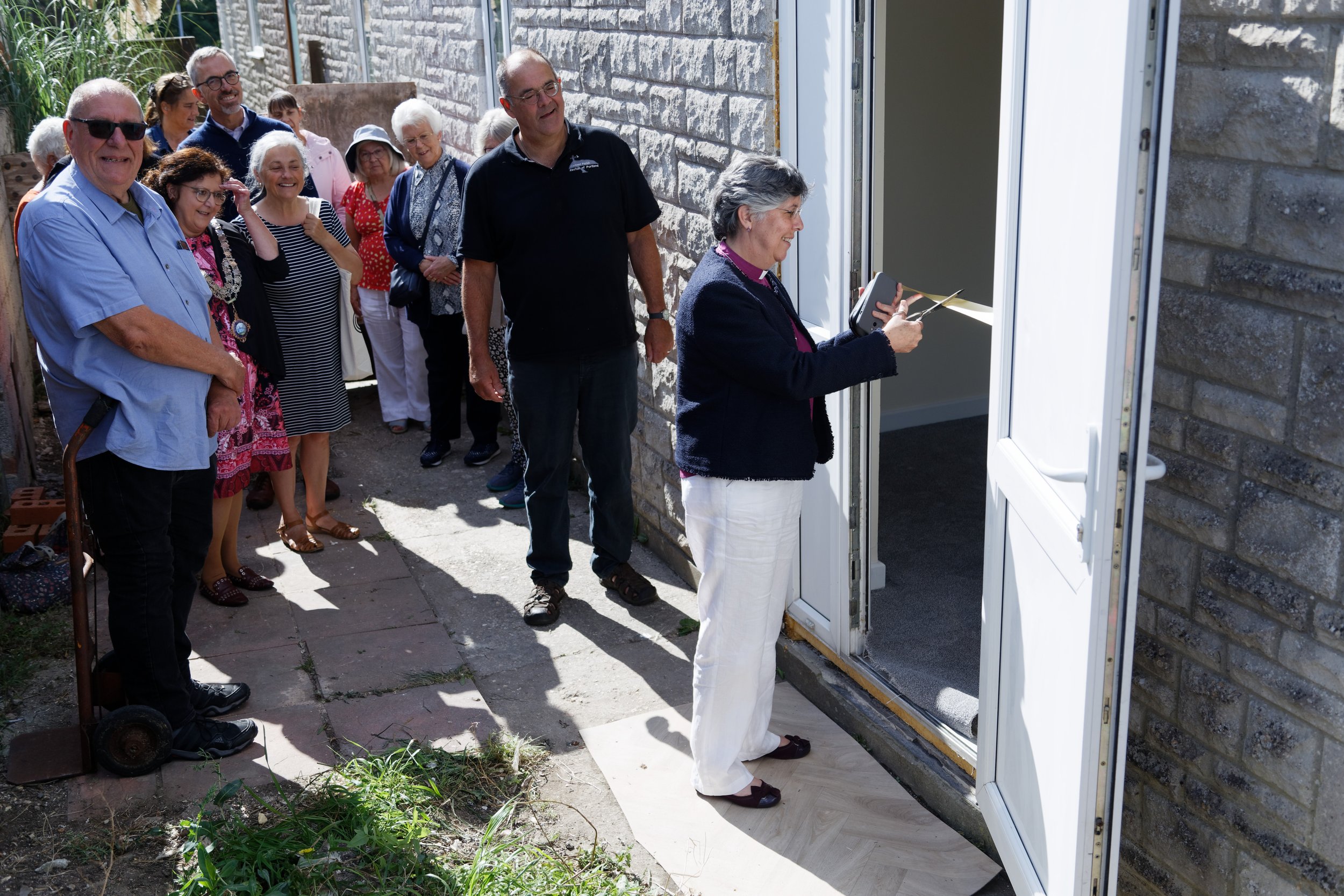
Bishop Guli opening two new flats created by St Andrews, Portland, from one of their church halls.
The Government’s National Plan to End Homelessness, published this week, acknowledges the urgency of the housing crisis as more and more people in Britain are either homeless or are at increasing risk of becoming so.
The main targets in the strategy are to halve the number of rough sleepers, end the policy of placing homeless families in B&B accommodation, and increase support for people who are at risk of becoming homeless – coupled with the government’s objective of building 1.5 million new homes.
I especially welcome the focus on reducing the number of families in temporary accommodation; it’s a scandal that around 170,000 children will go to bed tonight in a place they cannot call home – unsuitable, cramped, perhaps only a hotel room or B&B.
It’s right that the government’s strategy is prioritising the prevention of homelessness, not just relief, and the measures announced will go some way to making a difference. However, our housing system as a whole is broken, and rising homelessness is a symptom of that.
From a Christian perspective, the greatness of a nation is judged not by the achievements of those who are rich, famous and powerful, but by how we treat those who are poor, marginalised and vulnerable. Our housing system isn’t successful when house prices keep rising – but when it provides a decent, affordable home to those on the lowest incomes.
Without a readiness to make sacrifices, we will not be able to mend our broken housing system, argued the Archbishops’ Housing Commission in the Coming Home report. Unless those with broader shoulders are willing to accept some sacrifices, we will perpetuate the status quo in which people on lower incomes and at the margins of society are the ones who make the sacrifice, since they have no alternative but to live in unsafe, inadequate, unaffordable and unstable housing.
There is an opportunity for local churches to extend our hospitality in a transformative way by considering whether we could make available any underused land – even for a few years – to provide a decent home for a family in our neighbourhood who are stuck in Temporary Accommodation until they can move into permanent housing. There are new funding and manufacturing models which make this provision possible in a few months, not years.
At this time of year, we remember the birth and early years of Jesus Christ, God with us, who was made homeless as a child, forced to flee with his family as a refugee. May our hearts be touched afresh by the plight of homeless families in our own communities, and may we, through prayer, compassion, and perhaps even sacrifice, put our faith into practice so that others can have a place to call home.